This hands-on workshop focuses on the use of point-of-care ultrasound (POCUS) in small animal emergency and critical care.
POCUS significantly improves diagnostic confidence — studies have shown an increase of up to 89% when ultrasound is integrated into patient assessment.
“Seeing is believing” — visualisation transforms clinical decision-making.
This workshop is designed to help clinicians use ultrasound as a rapid bedside tool, particularly in unstable patients where traditional imaging may not be feasible.
Practical Training
Participants will perform and practise key POCUS applications, including:
Dr. Laura Cole is a board-certified specialist in both European and American colleges of Emergency and Critical Care. She combines extensive clinical experience with a strong focus on point-of-care ultrasound as a decision-making tool in emergency patients, delivering highly practical, clinically relevant training.
Why This Workshop Matters
Point-of-care ultrasound is becoming an essential tool in modern veterinary emergency care.
When used effectively, it enables rapid patient assessment, improved diagnostic accuracy, and faster clinical decision-making, directly impacting patient outcomes.
Register
Places are limited due to hands-on training format. Early booking is strongly recommended.

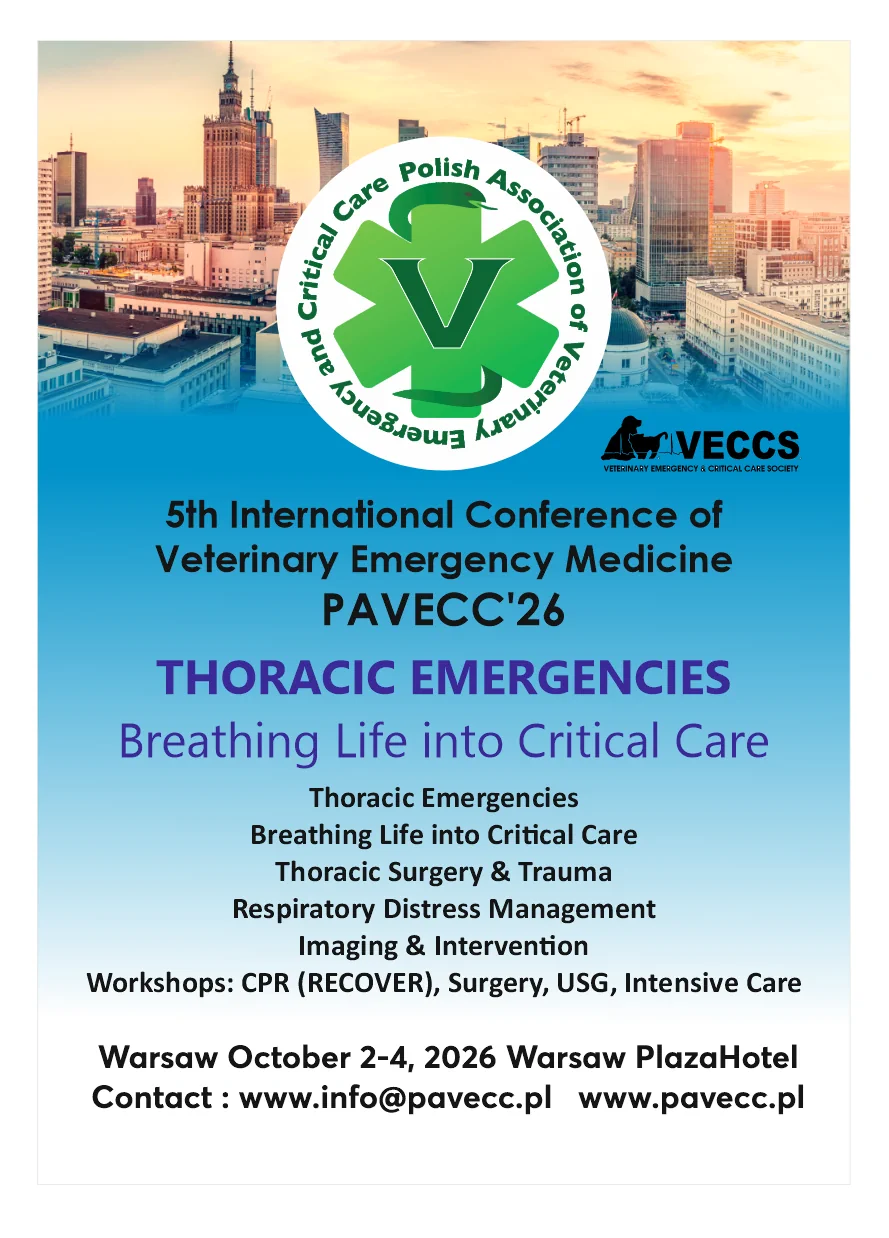
POCUS in Emergency & Critical Care Workshop 2026
€350.00 included VAT
Date: 2 October 2026
Time: 10:00- 16.00
Location:
Veterio
ul. Taśmowa 7 / Building A
02-677 Warsaw, Poland
11 in stock
Workshop Overview
This hands-on workshop focuses on the use of point-of-care ultrasound (POCUS) in small animal emergency and critical care.
POCUS significantly improves diagnostic confidence — studies have shown an increase of up to 89% when ultrasound is integrated into patient assessment.
“Seeing is believing” — visualisation transforms clinical decision-making.
This workshop is designed to help clinicians use ultrasound as a rapid bedside tool, particularly in unstable patients where traditional imaging may not be feasible.
Practical Training
Participants will perform and practise key POCUS applications, including:
Level
Beginner to Intermediate
Suitable for clinicians starting with POCUS as well as those looking to structure and refine their approach.
Course Details
Date: 2 October 2026
Time: 10:00- 16.00
Location:
Veterio
ul. Taśmowa 7 / Building A
02-677 Warsaw, Poland
Cost:
350 EUR / 1400 PLN
Capacity:
16 participants
Small-group, hands-on workshop with supervised scanning and case-based learning.
Instructor
Dr Laura Cole
MA, VetMB, MVetMed, CertVPS, CertAVP (ECC), Dipl. ACVECC, Dipl. ECVECC, MRCVS
Lecturer in Emergency and Critical Care
Royal Veterinary College, London, United Kingdom
Dr. Laura Cole is a board-certified specialist in both European and American colleges of Emergency and Critical Care. She combines extensive clinical experience with a strong focus on point-of-care ultrasound as a decision-making tool in emergency patients, delivering highly practical, clinically relevant training.
Why This Workshop Matters
Point-of-care ultrasound is becoming an essential tool in modern veterinary emergency care.
When used effectively, it enables rapid patient assessment, improved diagnostic accuracy, and faster clinical decision-making, directly impacting patient outcomes.
Register
Places are limited due to hands-on training format.
Early booking is strongly recommended.